
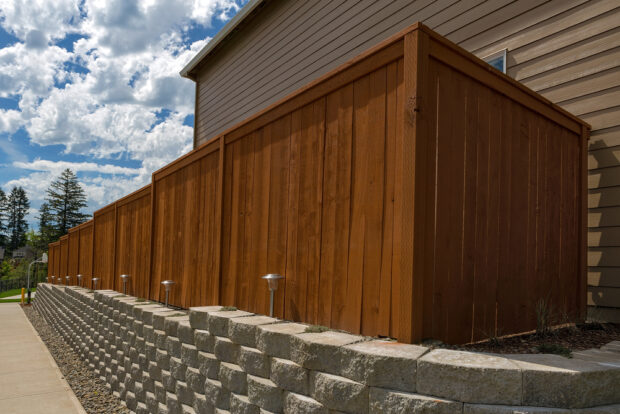
Retaining walls play a critical role in many homeowners association communities across the Kansas City area. They stabilize slopes, protect roads and sidewalks, support landscaping, and help prevent costly erosion. When these walls begin to fail, the problem extends beyond appearance. It can create safety hazards, drainage issues, and expensive property damage that affects an entire neighborhood.
Quick Answer
Replacing failing HOA retaining walls requires more than removing old materials and installing new ones. Successful projects begin with a thorough engineering evaluation, proper drainage design, quality construction methods, and materials suited for local soil conditions. For HOA boards and property managers in Kansas City, investing in engineered retaining wall solutions helps protect community infrastructure while reducing future maintenance costs.
What Local Readers Should Know
- Retaining wall failures often begin with drainage problems long before visible movement appears.
- Kansas City’s clay-rich soils expand and contract with seasonal moisture changes, placing significant pressure on retaining walls.
- HOA communities are often responsible for retaining walls that support common areas, roadways, ponds, and shared landscaping.
- Early engineering assessments can help identify repair or replacement needs before failures become emergency situations.
- Local freeze-thaw cycles and heavy spring rainfall can accelerate deterioration throughout Jackson County and surrounding communities.
Why This Matters Locally
Replacing retaining walls is especially important throughout Kansas City because many neighborhoods were developed on rolling terrain that requires engineered slope stabilization. Communities throughout Jackson County, Clay County, Platte County, Johnson County, and Lee’s Summit often rely on retaining walls to support streets, walking trails, clubhouse areas, and landscaped entrances.
Seasonal weather creates additional challenges. Spring storms can saturate soils, while winter freeze-thaw cycles increase pressure behind aging walls. Combined with expansive clay soils common throughout the region, these conditions can significantly shorten the lifespan of poorly drained or improperly designed retaining walls.
MSE Hardscapes LLC works with HOA communities to evaluate aging retaining walls and develop long-term replacement solutions designed for local conditions. After this introduction, we’ll refer to ourselves as we because our goal is helping community leaders make informed infrastructure decisions.
Local Data or Field Observations
Professional field observations consistently show that drainage is one of the leading contributors to retaining wall failure throughout the Kansas City region. Many older HOA walls were built decades ago using construction methods that may not meet current engineering practices or account for long-term water management.
Walls supporting community entrances, detention ponds, sidewalks, and shared green spaces often experience years of hydrostatic pressure before visible damage appears.
Local Impact
Failing retaining walls affect much more than landscaping. HOA communities may experience sidewalk settlement, cracked pavement, damaged irrigation systems, drainage problems, and reduced property values. In severe cases, wall failures can create unsafe walking conditions or threaten nearby structures.
Because many retaining walls support shared community assets, delaying replacement can increase repair costs as surrounding infrastructure begins to shift.
Warning Signs
Replacing a retaining wall becomes more likely when multiple warning signs appear.
- The wall is leaning or bowing outward.
- Horizontal or stair-step cracks develop.
- Blocks or stones begin separating.
- Soil is washing out behind or beneath the wall.
- Standing water remains near the wall after rainfall.
- Bulging sections appear along the wall face.
- Nearby sidewalks or pavement begin settling.
- Trees or large shrubs are causing visible wall displacement.
When to Call a Professional
Professional evaluation is recommended as soon as retaining wall movement becomes visible. While HOA boards can monitor minor cosmetic issues, structural movement, significant cracking, drainage failures, or leaning walls require engineering assessment.
Communities throughout Kansas City should especially schedule inspections after unusually heavy rainfall or severe winter weather if retaining walls already show signs of distress.
Common Local Causes
Replacing retaining walls often becomes necessary because several local factors work together over time.
Poor Drainage
Poor drainage is one of the most common causes of retaining wall failure. Water trapped behind the wall creates hydrostatic pressure that eventually pushes the wall outward.
Expansive Clay Soils
Much of the Kansas City metro sits on clay soils that expand when wet and shrink during dry periods. This repeated movement places continuous stress on retaining wall systems.
Aging Construction
Many HOA communities were developed decades ago. Older retaining walls may have exceeded their intended service life or lack modern drainage systems.
Tree Root Growth
Large mature trees provide valuable shade but can also create significant structural pressure as roots expand behind retaining walls.
Heavy Storm Events
Seasonal rainfall throughout western Missouri and eastern Kansas increases soil saturation and erosion around retaining wall systems.
Prevention and Maintenance
Routine inspections help HOA communities identify problems before replacement becomes an emergency project.
Preventive maintenance includes:
- Inspect retaining walls every spring and fall.
- Keep drainage outlets free of debris.
- Watch for new cracks or leaning sections.
- Remove vegetation growing directly within wall joints.
- Address erosion before it becomes widespread.
- Schedule professional inspections when movement appears.
DIY inspections are appropriate for visual observations, but excavation, structural repairs, and wall modifications should always be handled by experienced professionals.
Expected Results
Replacing a failing retaining wall with an engineered solution provides improved slope stability, better drainage management, enhanced safety, and a more attractive community appearance.
Modern retaining wall systems are designed to better accommodate soil movement, water management, and long-term structural performance when installed correctly.
Common Mistakes
Mistake: Repairing Only Visible Damage
Consequence: Hidden drainage problems continue damaging the wall.
Better Approach: Evaluate the entire retaining wall system before choosing repair or replacement.
Mistake: Ignoring Minor Leaning
Consequence: Small structural movement often becomes much larger over time.
Better Approach: Schedule an inspection as soon as movement is noticed.
Mistake: Installing Replacement Walls Without Engineering
Consequence: New walls may experience similar failures if underlying soil or drainage problems remain.
Better Approach: Use engineered retaining wall designs appropriate for site conditions.
Common Local Scenario
An HOA notices several retaining wall sections beginning to lean near the neighborhood entrance after multiple seasons of heavy rainfall. Residents report cracked sidewalks and poor drainage nearby. Rather than making repeated cosmetic repairs, the board commissions an engineering evaluation that identifies drainage deficiencies and long-term soil movement. The replacement project includes updated drainage systems and engineered wall construction designed to better handle local conditions.
Related Service Solutions
Engineered retaining wall replacement is often part of a larger community infrastructure improvement project. Related services may include:
- Retaining wall inspections
- Engineered retaining wall construction
- Drainage improvements
- Erosion control
- Grading and site preparation
- Community entrance improvements
- Hardscape renovations
Comparing Your Options
| Option | Best For | Considerations |
|---|---|---|
| Minor Repairs | Small cosmetic issues with no structural movement | Does not solve underlying drainage or engineering concerns |
| Partial Replacement | Isolated wall sections with limited damage | Requires careful evaluation of adjacent structures |
| Complete Engineered Replacement | Significant movement, drainage failure, or aging walls | Higher initial investment but provides long-term stability |
Service Areas
We proudly serve HOA communities throughout Kansas City, Lee’s Summit, Liberty, Blue Springs, Independence, Overland Park, Olathe, and surrounding communities across the metro area. Our retaining wall solutions are designed with local terrain, soil conditions, and long-term performance in mind.
Cost of Ignoring the Issue
Delaying retaining wall replacement often increases overall project costs. Continued movement can damage sidewalks, roads, utilities, landscaping, drainage systems, and nearby structures. Addressing problems early typically provides more options before failures become major infrastructure projects.
Frequently Asked Questions
How do I know if an HOA retaining wall in Kansas City needs replacement?
The clearest signs include leaning, bulging, large cracks, drainage problems, or soil erosion. A professional evaluation helps determine whether repairs remain practical or full replacement provides the safest long-term solution.
Why do retaining walls fail so often around Kansas City?
Clay soils, seasonal rainfall, freeze-thaw cycles, poor drainage, and aging construction all contribute to retaining wall deterioration throughout the region.
Can an HOA repair a retaining wall instead of replacing it?
Yes, minor issues may be repairable. However, structural movement, significant drainage failures, or widespread deterioration often make engineered replacement the more reliable option.
Are engineered retaining walls worth the investment?
Yes. Engineered retaining walls are designed to address soil conditions, drainage, and structural loads, helping reduce future maintenance and improve long-term performance.
How often should HOA retaining walls be inspected in Jackson County?
Most communities benefit from annual inspections, along with additional evaluations following severe storms or when visible changes appear.
What materials are commonly used for retaining wall replacement?
Engineered segmental block systems, reinforced concrete, natural stone, and other structural retaining wall systems may all be appropriate depending on site conditions and engineering requirements.
Will drainage improvements be included during replacement?
In most cases, yes. Proper drainage is one of the most important components of any successful retaining wall replacement project because it reduces water pressure behind the wall.
How long does a retaining wall replacement project usually take?
Project timelines vary depending on wall size, engineering requirements, permitting, weather, and site accessibility. A professional evaluation provides a more accurate schedule.
Protect Your HOA Community with Engineered Retaining Wall Solutions
A properly designed retaining wall helps protect your community’s infrastructure, improve safety, and reduce long-term maintenance concerns. Contact us today to discuss your HOA retaining wall replacement project and request a professional evaluation.